


ACNS00246 Honeysuckle Flower Extract for Cosmetic Formulations
Cosmetic formulators often need a botanical ingredient that does more than look good on a label. It needs a clear INCI name, defined marker content, stable supply, and documentation that supports real product development. ACNS00246 Honeysuckle Flower Extract from A Clover Nutrition Inc is positioned for that kind of work.
Lonicera japonica, commonly known as Japanese honeysuckle, has a long history in botanical applications. In personal care, its flower extract is often selected for formulas aimed at soothing, antioxidant support, and skin comfort. For brands building creams, serums, masks, cleansers, and other cosmetic products, a standardized extract can make the difference between a concept ingredient and a practical raw material.
A Clover Nutrition Inc has worked in high-purity active ingredients for more than 11 years, supplying cosmetic ingredients and high-purity natural products for development and production needs. ACNS00246 is currently in stock, with multiple assay options and a low minimum order quantity for sampling or scale-up.

ACNS00246 offers a standardized botanical option for beauty products
A botanical extract becomes more useful when it is standardized. Without standardization, formulators may face batch-to-batch variation that complicates texture, color, performance testing, and finished product claims. ACNS00246 Honeysuckle Flower Extract is supplied with defined assay options based on Chlorogenic acid, a recognized marker compound found in honeysuckle and other botanicals.
For cosmetic ingredient selection, this matters because a defined marker gives procurement and formulation teams a clearer way to compare lots and choose a grade that fits the finished product goal. A lower assay may suit broader botanical positioning, while a higher assay may fit a formula where active marker concentration is more central to the concept.
The INCI name is Lonicera Japonica (Honeysuckle) Flower Extract, which helps formulators list the ingredient properly on cosmetic product labels according to standard ingredient naming practice. The product is also associated with CAS number 223749-79-9 in the supplied product information.
Product item | Details |
Product code | ACNS00246 |
Ingredient | Honeysuckle flower extract |
Botanical name | Lonicera japonica |
Common name | Japanese honeysuckle flower extract |
INCI name | Lonicera Japonica (Honeysuckle) Flower Extract |
CAS number | 223749-79-9 |
Available stock | 520 kg |
Lead time | 2 to 4 working days |
Minimum order quantity | 1 kg |
Sample | Available based on required quantity |
The available grades give buyers room to match ingredient strength to budget, application, and product claims.
Grade | Standardization |
A | 10% by HPLC |
B | 50% by HPLC |
C | 98% by HPLC |
The HPLC method is commonly used in ingredient quality control because it helps identify and quantify selected compounds in complex natural materials. For buyers, the most useful point is simple: a clearly stated HPLC assay supports more consistent sourcing and better technical communication.
Honeysuckle flower extract fits soothing and antioxidant-focused formulas
Honeysuckle Flower Extract is widely used in cosmetic and personal care products where a natural botanical profile is desired. For buyers searching for Honeysuckle Flower Extract or Lonicera Japonica Flower Extract, ACNS00246 provides a standardized option with multiple purity levels for different product directions.
Its appeal comes from a combination of benefits associated with the botanical. In cosmetic formulation, Japanese honeysuckle flower extract is often selected for products focused on:
Soothing care
It can be used in formulas designed for skin comfort, especially in products that aim to feel gentle and calming.
Antioxidant positioning
Botanical extracts with phenolic compounds are often used in formulas that target environmental stress support and daily skin care routines.
Microbial balance concepts
Honeysuckle is often discussed for antimicrobial-related properties in ingredient literature, though it should not be treated as a stand-alone preservative unless supported by full preservation testing.
Natural-origin storytelling
The familiar honeysuckle flower gives finished products an easy-to-understand botanical identity.
These benefits make the extract suitable for a wide range of personal care products. It may be considered in facial serums, toners, lotions, creams, facial masks, hand care, scalp care, bath products, and rinse-off cleansing formulas. The exact use level, processing method, and compatibility will depend on the finished formula and the grade selected.

When developing with any botanical extract, formulators should test for color, odor, solubility, pH compatibility, and stability in the full formula. Botanical ingredients can interact with emulsifiers, surfactants, fragrances, preservatives, and packaging materials. Early bench testing helps avoid surprises at pilot scale.
The higher assay option may be attractive for targeted active concepts, while the 10% or 50% grades may be more practical for formulas that need a balanced botanical profile. The best choice depends on how the ingredient will be used, how the product will be marketed, and what documentation is needed for the final claim strategy.
Choosing the right grade depends on the product goal
One strength of ACNS00246 is that it is not limited to a single assay. The three available grades make it easier to choose a version that fits the finished product.
The 10% HPLC grade can be useful when a formulation needs a recognizable botanical extract without pushing the formula toward a very high active-marker concentration. It may work well in daily skin care concepts, rinse-off products, or formulas where the broader plant extract story matters.
The 50% HPLC grade gives a more concentrated option. This can be useful when formulators want a stronger marker specification, but still need room in the formula for other actives, humectants, soothing agents, or texture modifiers.
The 98% HPLC grade is the highest standardization listed for ACNS00246. It may suit more active-driven formulations or R&D projects where purity and marker concentration are key requirements. Because concentrated grades can behave differently in formulation, they should be tested carefully for solubility, dispersion, and stability.
Formula goal | Grade that may fit |
Broad botanical positioning | 10% HPLC |
Balanced active botanical concept | 50% HPLC |
High-purity marker-focused development | 98% HPLC |
This kind of grade selection can also support cost planning. Not every product needs the highest assay. A face cream, rinse-off cleanser, and concentrated serum may each require a different balance of performance, marketing value, cost, and processing behavior.
For cosmetic manufacturers, choosing the right grade early can reduce reformulation work later. The technical conversation should include the finished product type, target ingredient level, water or oil phase needs, heat exposure, pH range, and packaging format.
Supply details support sampling and production planning
A promising cosmetic ingredient still needs to fit the realities of procurement. Stock position, lead time, sample availability, and minimum order quantity matter, especially when a brand is moving from concept to pilot batch or from pilot batch to production.
ACNS00246 is listed with 520 kg in stock, which can support both development needs and larger purchasing plans. The stated lead time is 2 to 4 working days, which helps teams plan testing schedules without long delays. The 1 kg MOQ also makes the ingredient accessible for early formulation work before a larger commitment.

For a cosmetic raw material, buyers should request the documents needed for internal review and regulatory screening. These may include a certificate of analysis, specification sheet, safety data sheet, allergen or contaminant statements when available, and information on the manufacturing and quality control process.
The exact document set can vary by supplier and grade, so it is best to confirm requirements before placing an order. This is especially useful for companies selling across multiple markets, since cosmetic regulations differ by region.
A practical evaluation process may include:
Reviewing the INCI name and specification
Checking the assay method and grade
Requesting a sample for lab work
Testing solubility and formula compatibility
Running stability and preservation checks
Confirming documentation before production purchase
This process keeps botanical ingredients from becoming a source of delay later. It also helps the technical team understand how the extract behaves in a real formula rather than only on paper.
A Clover Nutrition Inc supplies high-purity natural ingredients
A Clover Nutrition Inc is based in Xi’an, Shaanxi, China, and has more than 11 years of experience in high-purity active ingredients. The company supplies cosmetic ingredients and high-purity natural products for customers looking for botanical extracts, active markers, and raw materials for personal care applications.
For ACNS00246, the key value is the combination of stock availability, multiple assay choices, and clear product identity. These details make it easier for cosmetic manufacturers, private-label developers, and ingredient buyers to evaluate the extract for new or existing formulas.
The product may be especially relevant for brands working on:
Natural-positioned facial care
Botanical serum concepts
Scalp and hair care formulas
Soothing toners and creams
Mask and wash-off products
Hand and body care products
A Clover Nutrition Inc can provide samples based on the required quantity, which supports early testing before a larger order. For current availability, specifications, and sample requests, inquiries can be directed through the company’s official website at www.clovernutrition.com or through its listed sales channels.
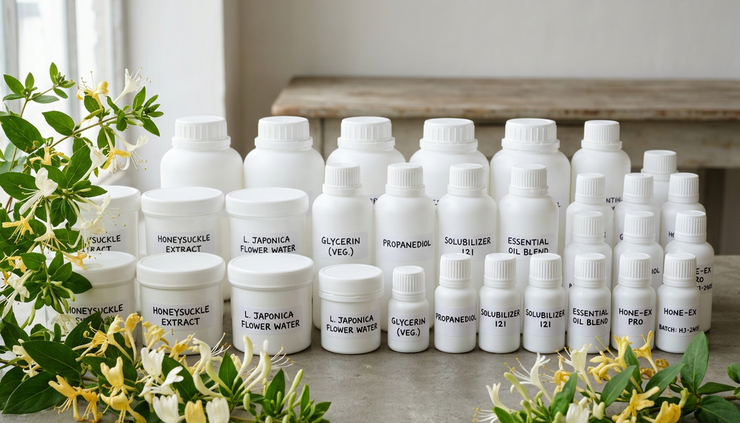
ACNS00246 Honeysuckle Flower Extract gives formulators a practical way to work with Japanese honeysuckle in cosmetic and personal care products. It offers a recognized INCI name, three HPLC assay options, current stock, short lead time, and low MOQ for testing.
For development teams, the next step is simple: choose the grade that matches the product concept, request suitable documentation, and test the extract in the finished formula. A well-selected botanical ingredient should support both the technical work and the story behind the product.
留言